Tuesday, 20 November 2018

How Was Technology 20 Years Ago?

What is Happening: Lets Take A Look At Technology 20 Years Ago.

Innovation 20 years back as of now had the web, obviously. In any case, just a couple of PCs were associated with it. So what do you think innovation is that time? 

How Was The Internet Then 

The web of 20 years prior was, will we say, "crude". It was known as the World Wide Web. There were just around 10,000 sites when contrasted with the present 45 billion site pages. Also, there were just two million PCs associated with the web amid that time. Today, there are very nearly four billion web clients. 

Applications On The Internet Then 
Obviously there were at that point applications on the web at that point. Amazon, Yahoo! Also, Mosaic Communications (later known as Netscape) were initially arranges. Netscape Navigator was the main business internet browser propelled at that point. Two years after came Microsoft Internet Explorer. At that point ten years after came the Mozilla Firefox.

How Computers Functioned

Internet was mostly used by scientists and clients then. But computers used floppy disks then. And it required telephones to literally dial a connection. The internet connection was made available through America on Line (AOL) and Compuserve. Sites had to give internet users instructions since no one knew what they were doing.

Other Information

Then US Vice President Al Gore used the phrase “information superhighway”. A year later the internet became popular in movies. Films like “Hackers” ( which starred Angelina Jolie) and Sandra Bullock’s “The Net” was released in the movies. Jolie was even quoted as saying that “talking to people all over the place…it’s amazing”.

More Innovations

The first banner was launched by Wired (so they claim). Graphics for AT&T and Zima, changed advertising forever. These graphics generated revenue for websites that did not charge users for access. It offered clients real numbers for how many saw their ad and clicked on it.
The first radio station to broadcast online was WXYC at the University of North Carolina. It paved the way for an audio streaming industry. This now includes Spotify, Pandora, and iHeartRadio. The first Online Shopping transaction was done for a pizza by Pizza Hut. While students from Swarthmore created the first online “secure market”. They called it NetMarket.
As the years go by innovations were made to improve and develop technology. That is why we enjoy the ease of doing hassle-free transactions and works.

Friday, 16 November 2018

How Technology is helping to increase access to Financial Services in Nigeria

One of the most critical drivers of economic growth is financial inclusion.

This is because access to financial services have so far been proven as a means to empowering people in various ways such as enabling businesses reach a larger market, facilitating the monitoring of inflows and outflows such that risks are minimized and most importantly helping to minimize income inequality.
Though many are still financially excluded in Nigeria with about 42% of the population lacking access to formal financial services (Efina, 2016), technology has enabled the banking industry provide various means through which these excluded persons can access financial services thus serving as an effective tool to bridge the financial inclusion gap.
Following the introduction of the cashless policy by the Central Bank of Nigeria in 2012, the banking sector has witnessed a quantum leap in the use of electronic channels of payment such as internet banking, automated teller machines (ATM), point of sale (PoS) devices and mobile applications, while financial technology (fintech) platforms have become the norm.
In addition, many banks have gone further to partner with fintech institutions and the telecommunications industry to facilitate the increased use of these services thus enhancing access to financial services without having to build more branches.
The impact of this is seen in the growth of retail and digital banking, the ecommerce industry and the facilitation of credit services. According to the National Bureau of Statistics, the volume of transactions done through electronic payment channels in Nigeria is about 509.67million as at Q2 2018, while the value of these transactions is worth N32.9billion.
Furthermore, with the advent of artificial intelligence, banks can now make use of customer’s data to creatively develop affordable and easily accessible products and services tailored directly to meeting customers’ needs.
With more banks aggressively adopting financial technologies that are moving the bank branch to devices, there is no doubt that more individuals will become financially included in the near future.
A case in point is Zenith Bank’s upgrade of its mobile app to support account opening and Qwerty Banking (transactions while using any chatting app like Whatsapp or Telegram). The Bank is also a big investor in the use of Unstructured Supplementary Service Data (USSD) with its *966# short codes. Additionally, its Scan to Pay solution is one of the few in Nigeria that supports MasterPass and mVisa payments.
Despite the strides, however, more needs to be done in the area of beefing up financial literacy campaigns such that individuals not only have access to these financial products and services but are able to convert them to improve their financial status.

Huawei Launches ICT Competition in Nigeria with 15 Universities

Huawei has launched an ICT competition in Nigeria in partnership with local universities with the aim of cultivating local ICT talents, promoting a greater understanding of and interest in ICT, and developing a healthy ecosystem for the sustainable growth of ICT sector.
This is the first time the leading global ICT solutions provider is bringing the global event to Nigeria.
Over 10,000 students from over 15 universities are expected to participate in the contest with various subjects including Cloud Computing, artificial intelligence, mobile networks and big data.
The competition which was launched at the “Nigeria ICT Talents Development Summit and Huawei ICT Competition Launching Ceremony “ in Abuja, had key stakeholders in the ICT industry including Hon. Minister Of Communication Dr. Abdur-Raheem Adebayo Shittu, FNCS; Commercial Counselor of the Chinese Embassy in Nigeria, Zhao Linxiang; Vice President of Huawei Public Relations, Xue Man; General Manager of Huawei Abuja Office, Nigeria, Tank Li; Chairman of the Nigerian University Management Committee Prof. Abubakar Rasheed; and presidents of participating universities.
Speaking at the ICT Competition Launching Ceremony, Minister of Communication, Dr. Abdur-Raheem Adebayo Shittu said “This is an epoch-making event for several reasons, the most significant of which is that the present government in Nigeria is easily the first government since the country’s independence to come on stage by leveraging the benefits of the digital revolution in partnership with Huawei as a leading global supplier of ICT products and solutions.”
“The development of the ICT industry is important for the economic and social development of the country and the improvement of people’s lives. Improving ICT infrastructure and cultivating talents in the ICT industry are key measures for the country to achieve rapid development” He said.
Zhao Linxiang, Commercial Counsellor of the Embassy of the People’s Republic of China in Nigeria, noted that Nigeria’s ICT development momentum is rapid. According to him, “Huawei, as an excellent enterprise in China, has been participating actively in Nigeria’s national ICT planning and construction, supporting the vision of ‘Nigeria ICT Transformation’ to be realized soon.
Tank Li, General Manager of Huawei Abuja Office, Nigeria , said, “Building a pool of high quality ICT talent is a critical success factor for governments aiming to transition to knowledge-based economies. As one of the world’s leading innovators, knowledge transfer has always been a core pillar of the Huawei ethos”.
“We created this platform to demonstrate that the young talents in Nigeria have the potential to mature into world-class experts. By enhancing industry-academic cooperation, we hope to make contribute to achieving the country’s development goals.” Tank Li said.
At the event, 5 universities, University of Nigeria, Ahmadu Bello University, Lead City University, America University of Nigeria and Federal University Technology also launched the Huawei Authorized Information and Network Academy (HAINA) program. HAINA is a nonprofit ICT career certification program which aims to increase employment opportunities for young people by exposing them to more ICT knowledge and skills required in the job market.
The Huawei ICT competition 2018 has been launched in more than 10 sub-Saharan Africa countries, including South Africa, Kenya and Zambia. So far, more than 20,000 students have registered for the contests.
Winners of the contest in Nigeria will have opportunity to participate in the regional finals in South Africa and global finals at Huawei’s headquarters in Shenzhen China.
Huawei is a leading global provider of information and communications technology (ICT) infrastructure and smart devices. With integrated solutions across four key domains — telecom networks, IT, smart devices, and cloud services — we are committed to bringing digital to every person, home and organization for a fully connected, intelligent world.
Huawei’s end-to-end portfolio of products, solutions and services are both competitive and secure. Through open collaboration with ecosystem partners, we create lasting value for our customers, working to empower people, enrich home life, and inspire innovation in organizations of all shapes and sizes.
At Huawei, innovation focuses on customer needs. We invest heavily in basic research, concentrating on technological breakthroughs that drive the world forward. We have more than 180,000 employees, and we operate in more than 170 countries and regions. Founded in 1987, Huawei is a private company fully owned by its employees.

Wednesday, 14 November 2018

Fortnite's glider redeploy mechanic is being removed from default game modes

The ability to redeploy gliders will be restricted to larger team modes while Epic continues testing.


In the Fortnitemares v6.20 refresh, Epic empowered lightweight plane redeployment in all Fortnite diversion modes, which means players could haul out their lightweight plane whenever insofar as they were three units or higher. What was intended to be seven days in length test has reached out into two, with players both raging over and commending the enormous buff to portability.

In any case, today Epic expressed that it's moving back the lightweight flyer redeployment change in tomorrow's v6.30 refresh, limiting it to huge group diversion modes where it was first considered. This isn't really the last time we'll have the capacity to redeploy lightweight flyers in default performances, pairs, or squads, however. Epic expresses an absence of correspondence and speed for dialing down the gas, "We didn't satisfy desires for rapidly emphasizing on the technician and imparting designs."

Sufficiently reasonable. I'm a colossal fanatic of lightweight plane redeployment myself. We can talk balance throughout the day, yet it makes moving around that tremendous guide on a very basic level all the more engaging, and I think Epic is remembering that. In any case, I do perceive how such a quick and significant change upset existing playstyles too brutally. As fast as Epic has been repeating on Fortnite, it expected to react significantly speedier to exploitative or disappointing playstyles rising up out of the capacity to coast in or out of battles freely, and it didn't. I have confidence that lightweight plane redeployment can work once things or capacities are acquainted with make each jump a more hazardous suggestion, yet in any event, I can fly around Disco Domination all I like, longing for a superior world.

Thursday, 1 November 2018

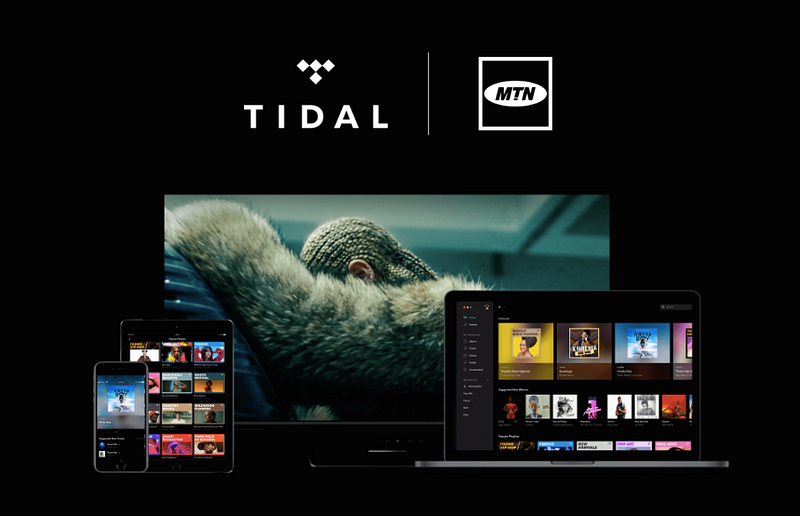
Jay-Z’s music streaming service, TIDAL has made its foray into the African market

Subscription-based music streaming service, TIDAL owned by American music rapper, Jay-Z has made its foray into the African market through a partnership with Africa’s leading telecommunications operator, MTN.

The music streaming service, which has launched in Uganda, provides MTN Uganda over 10 million subscribers a variety of options for a data-inclusive TIDAL membership as part of their mobile plan to gain access to exclusive high-quality streaming music, videos, concerts, livestreams and original content available on TIDAL.
According to Lior Tibon, COO of TIDAL,
“Africa is a continent that has long been an inspiration for music heard around the world and TIDAL is excited to highlight the vibrant musicians on our platform. TIDAL is also thrilled to bring a new wave of digital music to Uganda as part of this collaboration.”


The partnership, which is expected to be rolled out in other MTN operations across Africa, comes with an array of membership options where customers can tap into one, three, seven and 30-day memberships, all of which include data and a free 30-day trial for all first-time members.
MTN customers in Uganda will be able to subscribe to TIDAL using MTN Mobile Money and can sign up to any subscription package by dialling *165*66# via their mobile phones.
TIDAL is available in more than 52 countries, and boasts over 57 million songs and more than 233,000 high quality videos.

NimCure App — digital tool for monitoring patient treatments

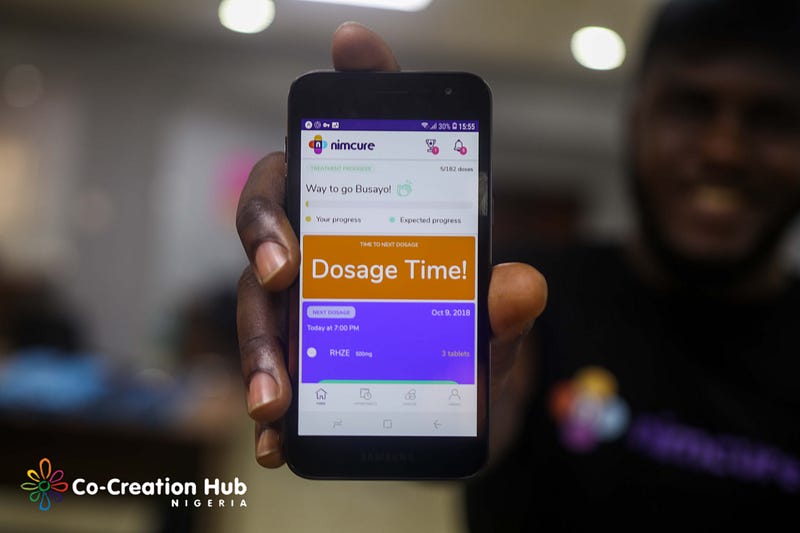
The NimCure app is a digital patient care tool to promote adherence to treatment by TB patients.

Using the NimCure app, patients are paired with caregivers who support and manage treatment remotely. The app innovates around the current method of treatment, Direct Observe Therapy (DOT) by the use of vDOT (video Direct Observe Therapy).
With NimCure, patients are able to record short videos to log their daily dosage. Other features of the app include enabling patients to track treatment progress, receive key notifications and reminders as well as contact their caregivers. Caregivers, through the NimCure Care app, are able to monitor patient treatment including assessing video submissions, manage patient treatment progress and contact them directly.
The app was developed by Nigeria’s Co-Creation Hub (CcHUB) in partnership with the Nigerian Institute of Medical Research (NIMR).